Wrapped around the foot of Table Mountain, Cape Town is a city where wild places begin at the end of the street.
Few cities let the wild in quite like Cape Town. Table Mountain National Park runs right through it, so you can breakfast on the V&A Waterfront, walk among fynbos by lunchtime and watch African penguins waddle up the sand at Boulders Beach in the afternoon.
The city itself is just as rewarding. Cape Malay, Dutch, British and African influences meet in its food, architecture and music, from the brightly painted houses of the Bo-Kaap to the Zeitz MOCAA, set in a converted grain silo on the harbour. Chefs make the most of superb local produce, and the vineyards of Constantia lie within the city limits.
Beyond the centre, the Cape Peninsula unfolds along Chapman’s Peak Drive to the cliffs of Cape Point, while the Winelands are about an hour’s drive away. Cape Town also pairs beautifully with a safari, with short flights to the Kruger and the malaria-free reserves of the Eastern Cape within easy reach.
Each part of the city has its own character, so where you stay shapes your visit.
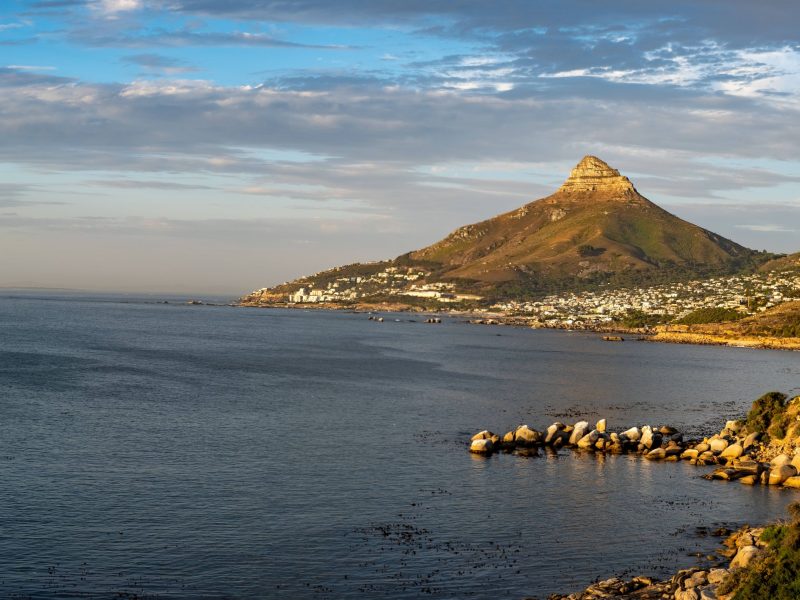
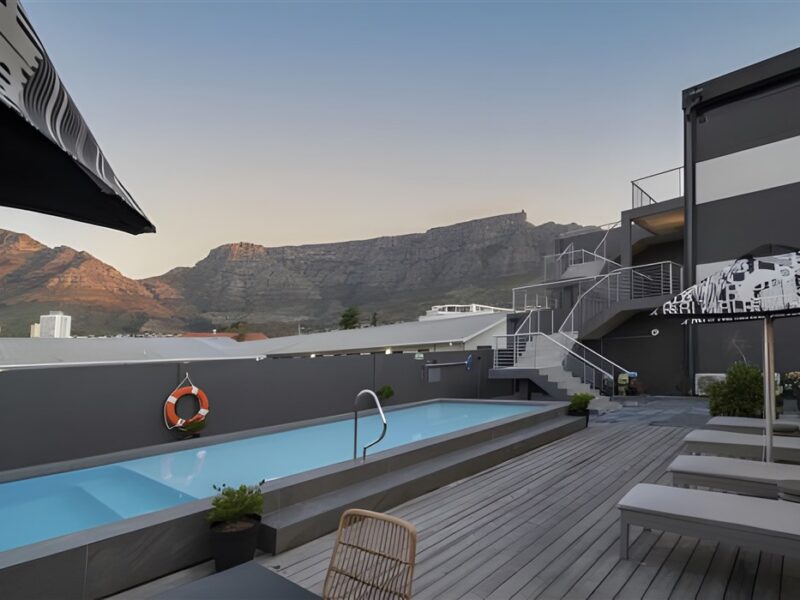
City Bowl: Cradled between Table Mountain, Devil’s Peak, Lion’s Head and Signal Hill, the City Bowl is the historic heart of Cape Town. Here you’ll find the Company’s Garden, St George’s Cathedral and the cobbled streets of the Bo-Kaap, along with the cafés and bars of Kloof and Bree streets. The lower cableway station is only a short drive away.
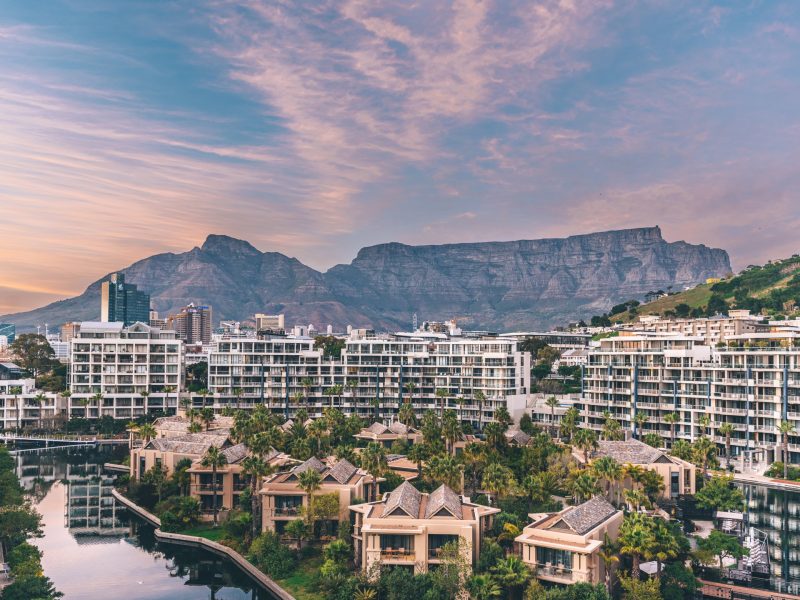
V&A Waterfront: The city’s working harbour doubles as its liveliest meeting place, with shops, restaurants, craft markets and the Two Oceans Aquarium. Ferries to Robben Island leave from here, and Table Mountain fills the skyline behind.
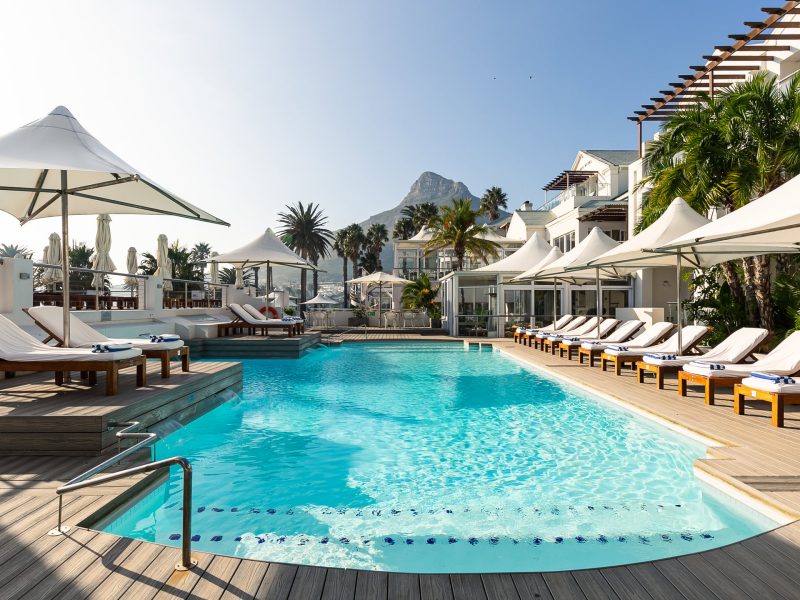
Camps Bay: Palm-lined and buzzing, Camps Bay faces a broad sweep of white sand with the Twelve Apostles rising behind. Cafés and restaurants line Victoria Road, and sunset here is an event in itself.
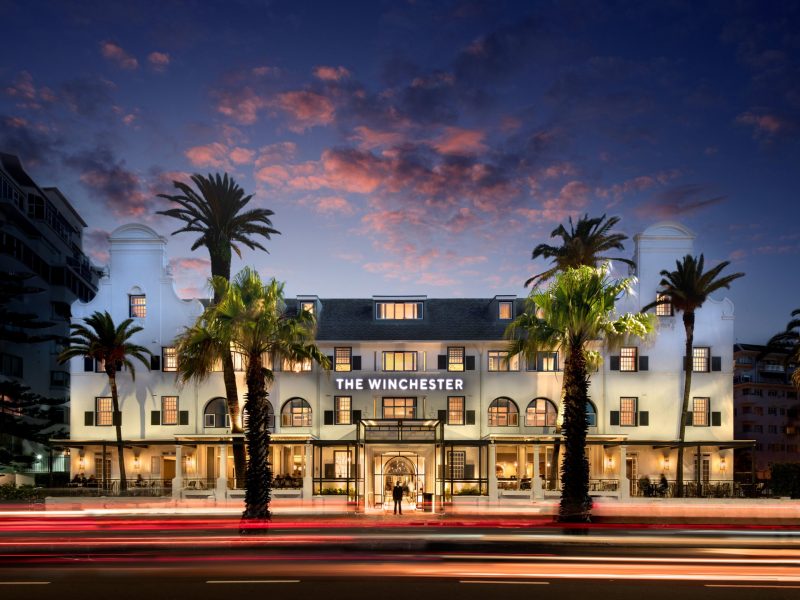
Sea Point: Sea Point’s promenade is where Cape Town comes to walk, run and watch the sun set over the Atlantic. Ocean pools are scattered along the shore, and the streets behind are full of coffee shops, boutiques and restaurants.
Long before European ships arrived, the Cape was home to the San, who hunted and gathered here for thousands of years, and later the Khoikhoi, who grazed their cattle beneath the mountain. Portuguese navigator Bartolomeu Dias rounded the Cape in 1488, but it was the Dutch East India Company that put down roots. In 1652, Jan van Riebeeck set up a station here to supply passing ships with fresh food and water.
That small outpost grew into a town. The Castle of Good Hope, built between 1666 and 1679, is the country’s oldest surviving colonial building. Enslaved people brought from Southeast Asia, India, Madagascar and East Africa shaped the Cape Malay culture still celebrated in the Bo-Kaap today.
Britain took the Cape in 1795, handed it back to the Dutch in 1803 and returned for good in 1806. Cape Town later became the seat of South Africa’s parliament, a role it still holds.
The 20th century brought apartheid and its forced removals. From the late 1960s, the families of District Six were moved out of their homes, a story told movingly at the District Six Museum. Nelson Mandela spent 18 of his 27 years in prison on Robben Island, and on the day of his release in 1990, he spoke to the crowds from the balcony of Cape Town’s City Hall. Four years later, South Africa voted in its first democratic election, and he became president.
Cape Town sits within the Cape Floral Kingdom, the smallest of the world’s six floral kingdoms and the richest for its size. Table Mountain alone supports more than 2,200 plant species, many found nowhere else, and the protected areas around the city form part of the Cape Floral Region World Heritage Site. Fynbos, the region’s signature shrubland of proteas, ericas and restios, is at its most colourful in winter and spring, and Kirstenbosch National Botanical Garden is the loveliest place to see it.
The animals are every bit as memorable. A colony of African penguins lives on the beaches around Boulders in Simon’s Town, Cape fur seals crowd onto Duiker Island off Hout Bay, and chacma baboons forage along the peninsula. In the Cape of Good Hope section of the national park, look out for eland, bontebok and ostrich. From around June to November, southern right whales come close inshore to calve and are often visible from the cliffs along False Bay. Dolphins are regular visitors too.
Cape Town has a Mediterranean climate, with warm, dry summers and cooler, wetter winters. Every season has its own appeal, so the best time to go depends on what you want from your stay.
Summer (December to February)
Long, sunny days with highs typically in the mid- to high-20s°C make this the classic beach season. It is also the busiest and most expensive time to visit, especially over Christmas and New Year. The southeasterly wind, known locally as the Cape Doctor, can blow hard, so it pays to know the sheltered beaches such as Clifton. Evenings bring sunset concerts at Kirstenbosch and open-air films under the stars.
Autumn (March to May)
Often the calmest time of year. The wind eases, the sea is still at its warmest, and settled days mostly sit in the low to mid 20s °C. With the summer crowds gone, it is a lovely time for hiking, wine tasting and long lunches.
Winter (June to August)
These are the wettest months, with daytime highs usually in the high teens °C and cold fronts rolling in from the Atlantic. Between the showers come crisp, clear days that are perfect for climbing Table Mountain, and the mountainsides turn green. Southern right whales begin arriving in June, and hotel rates are at their lowest.
Spring (September to November)
Whale watching is at its best, with sightings peaking around September and October along False Bay and at Hermanus. Wildflowers bloom across the Cape, the days grow longer, and temperatures climb into the low to mid 20s °C by November, though a late cold front can still sweep through.
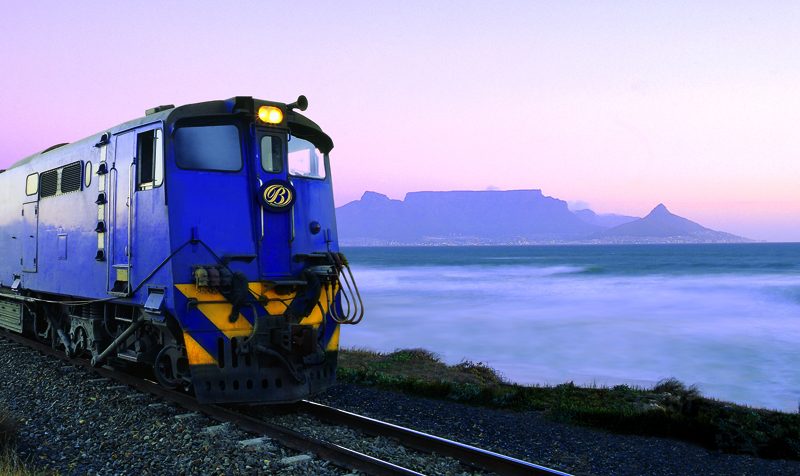
Start with Table Mountain. The cableway’s rotating cars reach the summit in about five minutes, or you can hike up with a guide on one of the many trails. Go early on a clear day, as clouds and wind can roll in quickly and close the cableway.
For history, take the ferry from the V&A Waterfront to Robben Island, then visit the District Six Museum and the Castle of Good Hope. In the Bo-Kaap, a Cape Malay cooking class is a delicious way to get to know the neighbourhood.
A full day on the Cape Peninsula is a must. Follow the cliffside curves of Chapman’s Peak Drive, stop at Boulders Beach for the penguins and walk out to the lighthouse at Cape Point. Back in town, Kirstenbosch has a curving treetop walkway known as the Boomslang, and the Zeitz MOCAA holds one of the world’s largest collections of contemporary African art.
Wine lovers can taste their way around Constantia, home to some of the country’s oldest wine estates, without leaving the city, or head out to the Winelands of Stellenbosch and Franschhoek. For something livelier, try sea kayaking along the Atlantic Seaboard, paragliding from Signal Hill or a surfing lesson at Muizenberg.
Cape Town lies in the far southwest of South Africa, on the shores of Table Bay. Its centre, the City Bowl, sits in a natural amphitheatre formed by Table Mountain, Devil’s Peak, Lion’s Head and Signal Hill. To the west, the Atlantic Seaboard runs past Sea Point, Clifton and Camps Bay beneath the Twelve Apostles. To the southeast, the broad sandy plain of the Cape Flats links the peninsula to the mainland.
South of the centre, the Cape Peninsula stretches for 52 km of mountain and coastline to Cape Point. Its eastern shore faces False Bay, where the water is noticeably warmer than on the Atlantic side. Cape Point is often described as where the Atlantic and Indian Oceans meet. However, that honour officially belongs to Cape Agulhas, Africa’s southernmost tip, further along the coast to the southeast.
Cape Town is part of a wider selection of SOUTH AFRICA holidays and accommodation.