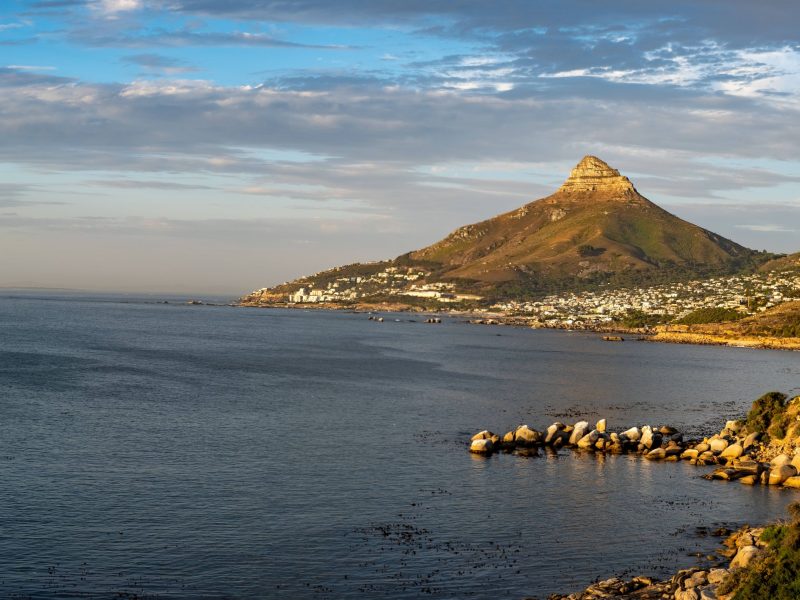
From the whale-watching cliffs of Hermanus to the forests of Tsitsikamma, the Garden Route is South Africa’s great coastal road trip.
Few road trips change scenery as often as the Garden Route. In a single week, you can watch southern right whales from a clifftop in Hermanus, cross a mountain pass into ostrich country and wake to the sound of the surf in Plettenberg Bay.
Strictly speaking, the Garden Route runs for about 200 km along the N2, from Mossel Bay to the Storms River Mouth. It is squeezed between the Outeniqua and Tsitsikamma mountains and the Indian Ocean, and rain falls in every month, which keeps its forests, lakes and lagoons a deep, lush green. Most journeys begin well before Mossel Bay, though, on the Whale Coast east of Cape Town, and many take a detour north into the semi-desert of the Klein Karoo.
Knysna and Plettenberg Bay are the best-known stops, but quieter places such as Wilderness and Nature’s Valley are just as rewarding. When you reach the end of the road, the malaria-free game reserves of the Eastern Cape are within a few hours’ drive, so it is easy to finish with a safari.
Each stretch of the route has its own character.
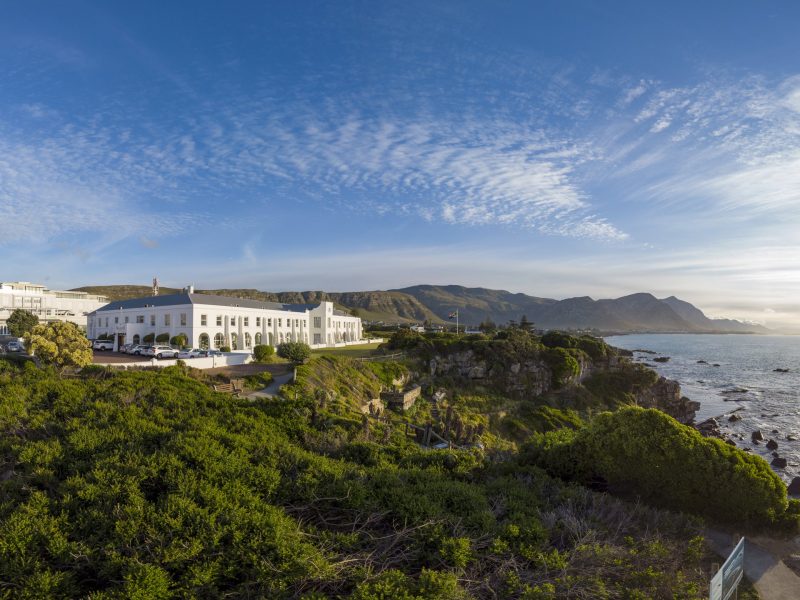
Hermanus and Gansbaai: The Whale Coast begins about an hour and a half from Cape Town. Hermanus sits on cliffs above Walker Bay, famous for some of the best land-based whale watching in the world, and a path runs along the cliff tops right through town. Further east, Gansbaai looks out to Dyer Island and Geyser Rock, home to African penguins and a large colony of Cape fur seals, while the fynbos-covered hills behind it are protected in private nature reserves.
Oudtshoorn and the Klein Karoo: Cross the Outeniqua Pass north of George and the green coast gives way to the Klein Karoo, a dry valley ringed by mountains. Oudtshoorn grew rich in the ostrich feather boom of the late 19th century, and grand sandstone mansions known as feather palaces still line its streets. Ostrich farms, the Cango Caves and the dramatic Swartberg Pass are all close by.
Mossel Bay and George: Mossel Bay marks the official start of the Garden Route. Its sheltered bay is where the first Europeans known to reach South Africa stepped ashore, and today it is popular for its beaches and maritime museum. George, the largest town in the region, sits at the foot of the Outeniqua Mountains and is home to the main airport.
Wilderness: Lakes, lagoons and a long sweep of beach make Wilderness a favourite with walkers, canoeists and paragliders. Its wetlands and rich birdlife are protected within the Garden Route National Park.
Knysna: Knysna wraps around a lagoon that meets the sea between two towering sandstone cliffs known as the Heads. The waterfront is the place for fresh oysters, and the forests behind the town are part of the largest stretch of indigenous forest in South Africa.
Plettenberg Bay: Known simply as Plett, this is the Garden Route’s classic beach town, with long stretches of golden sand. The rugged Robberg Peninsula juts into the ocean just south of town, and whales, dolphins and seals are regular visitors to the bay.
Tsitsikamma: At the eastern end of the route, the Tsitsikamma forests run right down to a wild, rocky shore. A suspension bridge crosses the Storms River Mouth, and the nearby Bloukrans Bridge is home to one of the world’s highest bungee jumps.
People have lived along this coast for a very long time. Caves at Pinnacle Point near Mossel Bay hold some of the earliest known evidence of modern human behaviour, and much later, San hunter-gatherers and Khoikhoi herders made the region their home.
In 1488, the Portuguese navigator Bartolomeu Dias anchored in Mossel Bay, the first European known to land on South African shores. Sailors who followed are said to have left letters in a shoe hung from a milkwood tree for passing ships to collect, and the Post Office Tree still stands in the town today. Plettenberg Bay was named Bahia Formosa, the beautiful bay, by the Portuguese and took its present name in 1778 after a visit by the Dutch Cape governor Joachim van Plettenberg.
In the 19th century, the great forests around Knysna drew woodcutters in search of yellowwood and stinkwood, and the timber trade built the town. Heavy logging and hunting took their toll, and the once-thriving Knysna elephants dwindled to just a handful. Inland, Oudtshoorn boomed when ostrich feathers became the height of fashion in Europe until the trade collapsed around the First World War.
Protection followed. Tsitsikamma was proclaimed a national park in 1964, and in 2009 it was joined with the Wilderness National Park and the Knysna National Lake Area to create today’s Garden Route National Park.
The Garden Route is less about big game than the remarkable variety of life packed into one stretch of coast. Southern right whales come close inshore to calve between June and November, and Walker Bay off Hermanus is one of the best places to see them from land. Humpbacks pass along the coast during their migrations, while dolphins and Cape fur seals are seen year-round, especially around Robberg in Plettenberg Bay. From Gansbaai, boat trips visit the penguins and seals of Dyer Island and Geyser Rock.
The forests are home to the Knysna turaco, a bright green bird that flashes crimson in flight, and the tiny Knysna dwarf chameleon. A few elusive elephants are thought to survive in the Knysna forests, though sightings are extremely rare. The Knysna estuary is home to the endangered Knysna seahorse, found in only a few estuaries along this coast, and the black-and-red African oystercatcher is a common sight on the rocky shores.
Inland, the Klein Karoo is ostrich country, and on early morning tours near Oudtshoorn, you can sit quietly as wild meerkats emerge from their burrows to warm up in the sun.
The Garden Route has one of the mildest climates in South Africa, and rain falls throughout the year rather than in a single wet season. That makes it a year-round destination, with each season bringing something different.
Summer (December to February)
Warm days, with highs in the mid-20s °C, make this the classic beach season. It is also the busiest time of year, as South African families head to the coast for the school holidays over Christmas and New Year, so it pays to book well ahead.
Autumn (March to May)
The holiday crowds thin out, the sea stays pleasantly warm into March, and settled days make this a lovely time for hiking and long lunches. Temperatures ease into the low 20s °C.
Winter (June to August)
Days are mild, usually in the high teens °C, and crisp, clear weather often follows the passing cold fronts. Southern right whales begin arriving in June, and in early July the Knysna Oyster Festival fills the town with ten days of food, music and sport. Outside the festival, this is the quietest time to travel.
Spring (September to November)
Whale watching peaks in September and October, especially in Walker Bay, and wildflowers bloom across the fynbos. The days grow longer and warmer, though spring can also bring some of the year’s wetter spells.
Start on the Whale Coast, where the Cliff Path in Hermanus gives grandstand views over Walker Bay. In season, whale-watching boats leave from Hermanus and Gansbaai, and the fynbos reserves above the bay are wonderful for walks and flower safaris.
Inland, explore the Cango Caves, meet the ostriches that made Oudtshoorn famous and drive the gravel switchbacks of the Swartberg Pass. Back on the coast, paddle a canoe upriver at Wilderness, take a boat out to the Knysna Heads and sample oysters on the waterfront.
In Plettenberg Bay, the circular hike around Robberg Nature Reserve passes seal colonies and empty coves, and boat trips head out to see whales and dolphins. Monkeyland, a primate sanctuary, and Birds of Eden, a vast free-flight aviary, are close by. Further east, walk across the suspension bridge at the Storms River Mouth or, for a jolt of adrenaline, try the Bloukrans bungee or a canopy tour through the Tsitsikamma forest.
Golfers are well looked after too, with some of the country’s finest courses around George and Plettenberg Bay. And when you are ready for big game, the malaria-free reserves of the Eastern Cape are within a few hours’ drive.
The Garden Route follows South Africa’s southern coast, spanning the Western Cape and the Eastern Cape. The classic route runs for about 200 km along the N2, from Mossel Bay to the Storms River Mouth, on a narrow coastal shelf between the Outeniqua and Tsitsikamma mountains and the Indian Ocean.
Behind the mountains lies the Klein Karoo, a dry, sunny valley that feels a world away from the coast. To the west, the Whale Coast runs from Hermanus to Gansbaai, while Cape Agulhas, the southernmost tip of Africa, lies a little further along the shore.
Most visitors drive the route from Cape Town, which is around six hours from Knysna by the most direct road, though the journey is far better spread over several days. George Airport has flights from Cape Town and Johannesburg, and Gqeberha, at the eastern end, makes a convenient place to finish.
Garden Route is part of a wider selection of SOUTH AFRICA holidays and accommodation.