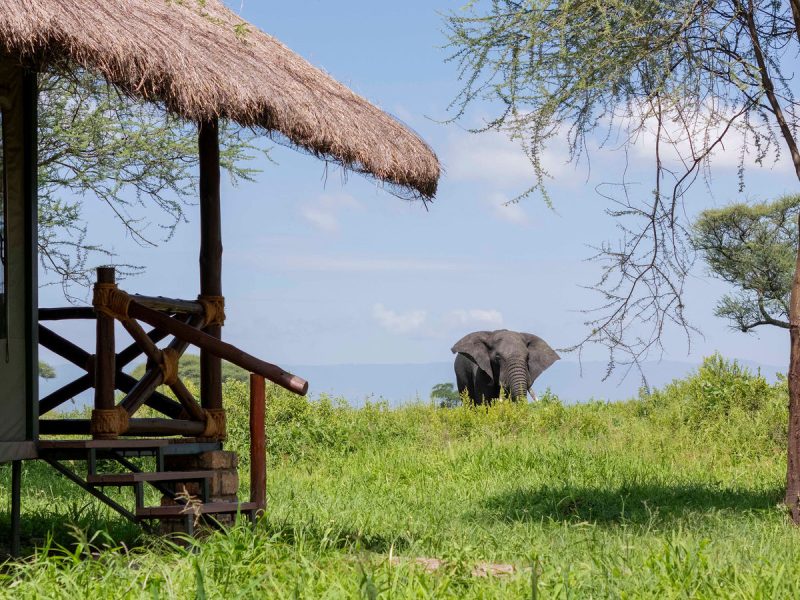
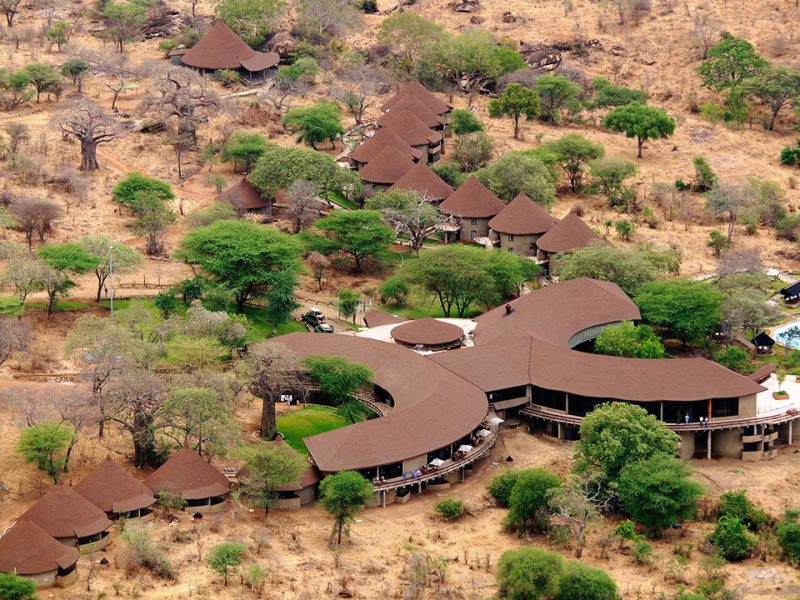
Tarangire comes alive just as the land around it empties, drawing elephants in their hundreds to the river.
Tarangire fills up just as everywhere around it empties. From around June, when the rains have long gone and the Maasai Steppe turns to dust, wildlife streams back to the one place that still has water. The Tarangire River becomes a lifeline, and the park holds some of the largest elephant herds in northern Tanzania.
It is a landscape unlike any other on the northern circuit. Ancient baobabs rise from the grass like great grey sculptures, many of them scarred where elephants have stripped the bark. Terracotta termite mounds stand among the acacias, and the river cuts through deep, winding ravines before draining into Lake Burunge. In the south, the Silale Swamp stays green long into the dry season.
Many safaris pass through in a single day on the way to the Ngorongoro Crater and the Serengeti. Stay longer, and Tarangire repays you with quieter tracks, dry-country antelope that are hard to find elsewhere on the northern circuit and some of the richest birdlife in East Africa.
Lying around 120 km southwest of Arusha, Tarangire makes a natural first stop on a Tanzanian safari.
For generations, the land around Tarangire has been grazing country for the Maasai and other pastoralist communities. The area was first protected as a game reserve in 1957 and became a national park in 1970. Today it is managed by Tanzania National Parks and forms part of the classic northern safari circuit, alongside Lake Manyara, the Ngorongoro Crater and the Serengeti.
Elephants are the stars. In the dry season, family herds move along the river in long, unhurried lines, digging into the sandy riverbed for water and gathering in the shade of the baobabs. They share the river with buffalo, zebras, wildebeest, giraffes, impalas and waterbuck. Lions hunt on the plains and along the riverbanks, and leopards keep to the riverine woodland. Cheetahs and African wild dogs are rare but possible.
Tarangire also gives you the chance to see dry-country species that are hard to find elsewhere on the northern circuit. Fringe-eared oryx, lesser kudu and the long-necked gerenuk all live here, and dwarf mongooses often make their homes in old termite mounds.
For birders, the park is a treasure. More than 550 species have been recorded, including the yellow-collared lovebird and the ashy starling, both found only in Tanzania. Kori bustards stride through the long grass, lilac-breasted rollers flash between the acacias, and bateleurs and lappet-faced vultures ride the thermals overhead. From November to April, migrants from Europe and Asia swell the numbers further.
Tarangire is at its best in the dry season, when the wildlife gathers along the river. In the wet months, many animals move out onto the surrounding plains, so the park changes character completely through the year.
Dry season (June to October)
This is the classic time to visit. Days are warm and sunny, the bush thins out and game is easy to find around the river and the swamps. Elephant numbers build steadily and peak towards the end of the season. It is also the busiest time, particularly in the north of the park.
Wet season (November to May)
The short rains usually fall in November and December, followed by the long rains from March to May. Many animals leave the park to calve on the open plains, so sightings are more spread out. In return, the park turns a vivid green, birdlife is at its peak and you will often have the tracks to yourself. Some seasonal camps close during the long rains.
Game drives are the heart of any stay. Head out early to watch elephants come down to the river, then return in the late afternoon as the low sun turns the baobabs gold. A picnic lunch lets you stay out all day and explore further south, where the park feels wilder.
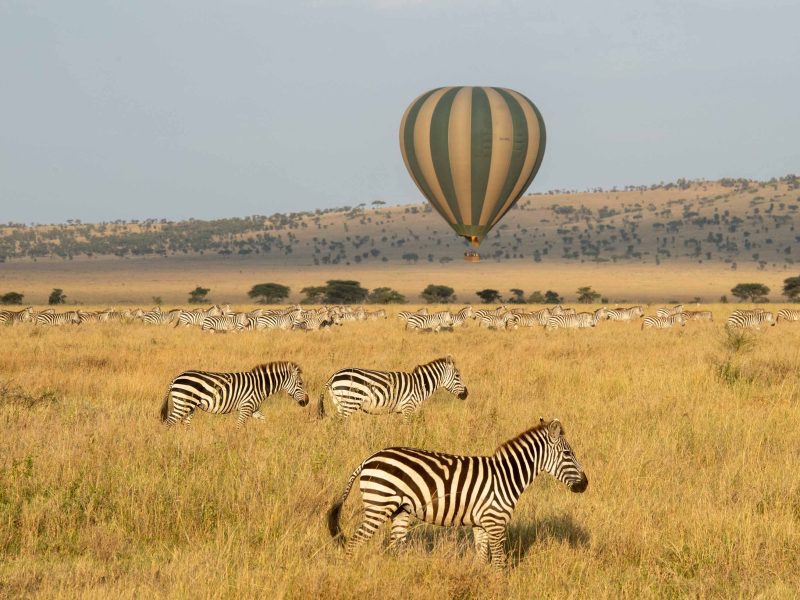
Tarangire offers more variety than most parks on the northern circuit. Guided walking safaris with an armed ranger reveal the smaller details of the bush, from tracks and dung to medicinal plants. Night drives with a spotlight bring out genets, bush babies and, with luck, a leopard on the hunt. Both are offered by selected lodges and camps. In season, hot air ballooning gives you a silent dawn view of the river and its herds.
Beyond the park, you can visit a Maasai village or wander the lively market town of Mto wa Mbu on the road to Lake Manyara.
Tarangire National Park covers around 2,850 sq km in the Manyara Region of northern Tanzania. It lies southwest of Arusha, between the Maasai Steppe to the southeast and the lakes of the Great Rift Valley to the north and west.
The Tarangire River runs through the northern half of the park, carving ever-deeper ravines before it leaves in the northwest and drains into Lake Burunge. The south is wilder and more remote, with a chain of swamps including Silale that slowly dry into lush grassland as the season wears on. Granite ridges, open plains and woodland of acacia, combretum and baobab complete the picture.
The park sits at the heart of a much larger ecosystem. Wildlife moves freely between Tarangire, the Simanjiro plains and neighbouring community conservation areas, which is why the seasons shape what you see so strongly.
Tarangire is part of a wider selection of TANZANIA holidays and accommodation.