Cairo enchants as Egypt's capital and top travel destination, blending ancient pyramids, Islamic souks, and museums and into an unforgettable experience.
Cairo doesn’t ease you in gently. The moment you arrive, the city envelops you: horns blaring, the call to prayer drifting across rooftops, the scent of spices mingling with bread baking in wood-fired ovens. This is where twenty million people navigate daily life amidst civilisations stacked so deep you’re perpetually treading on something ancient.
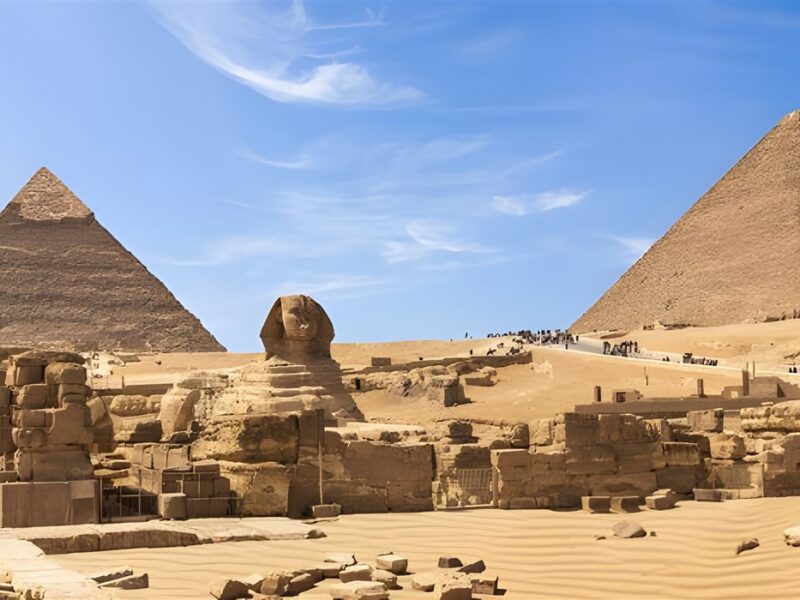
The Pyramids of Giza command the western horizon, those impossible 4,500-year-old monuments that no photograph quite prepares you for. Standing at their base beside the enigmatic Sphinx, you’ll grasp why people have been making pilgrimages here for millennia. It’s the sort of encounter that recalibrates everything you thought you knew about human ambition and achievement.
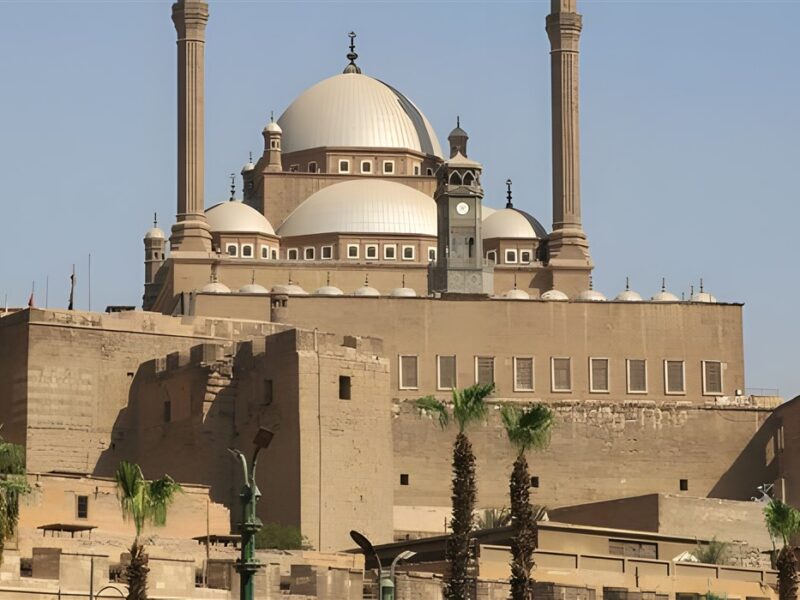
Islamic Cairo pulls you into its labyrinth immediately. Khan El Khalili’s spice-laden alleys twist deeper with each turn, merchants calling out from shops crammed with copper lanterns, silk scarves, and aromatic oils. Al-Azhar Mosque’s elegant minarets pierce the skyline, whilst climbing to the Saladin Citadel rewards you with sweeping views across a sea of domes and spires stretching to the desert beyond.
The museums deliver antiquity on an almost incomprehensible scale. The Grand Egyptian Museum stages Tutankhamun’s golden treasures and colossal pharaonic statues with proper theatrical flair, whilst Tahrir Square’s Egyptian Museum crams millennia of masterpieces into galleries where mummies and sarcophagi compete for your attention. For quieter moments, slip into the Coptic quarter where the Hanging Church and ancient synagogues offer respite, or lose yourself in the Museum of Islamic Art’s dazzling ceramics and calligraphy.
What makes Cairo irresistible is how it layers ancient grandeur over modern chaos without apologising for either. The Nile flows through it all, just as it always has, whilst the city reinvents itself hourly around you in a glorious, exhausting, utterly unforgettable collision of past and present.
Cairo’s story begins not where the city stands today but slightly south, near ancient Memphis, where pharaohs ruled for millennia. Romans built a fortress here in the 1st century AD, but Cairo as a recognisable city only crystallised in 969 AD when Fatimid conquerors founded al-Qahira, “the Victorious,” as their new capital.
What followed was Cairo’s golden age. Under Saladin in the 12th century and the subsequent Mamluk sultans, the city swelled to half a million souls, becoming the Islamic world’s intellectual and commercial powerhouse. The great mosques rose during this era: Al-Azhar with its scholarly traditions still intact, the soaring minarets that still define the skyline, and the bazaars that made Cairo synonymous with exotic trade. Walking through Islamic Cairo today means navigating streets laid out by mediaeval planners, passing buildings that Mamluk merchants would recognise instantly.
Ottoman rule from 1517 brought slower centuries until Napoleon’s 1798 invasion jolted Egypt into modernity’s uncomfortable embrace. Muhammad Ali’s 19th-century reforms added European-style boulevards and Belle Époque architecture that still graces downtown, fuelled by cotton wealth that made Egypt strategically irresistible to colonial powers.
For visitors, this layered history isn’t academic but visceral. The Coptic quarter preserves Christian Egypt’s ancient roots, Islamic Cairo offers mediaeval splendour barely touched by time, whilst downtown’s faded grandeur speaks to colonial ambitions and independence struggles. Today’s sprawling metropolis of over twenty million somehow contains all these eras simultaneously, making Cairo less a single city than a compendium of everything Egypt has ever been.
Cairo is part of a wider selection of EGYPT holidays and accommodation.