The crater steals the headlines, but Ngorongoro is a whole highland world of forest, farmland and ancient footprints waiting beyond the rim.
Most people come for the crater, and it rarely disappoints. Yet the Ngorongoro Conservation Area stretches far beyond its famous rim, across cool, forested highlands, quieter craters and open plains where the wildebeest come to calve.
Down on the crater floor, lion, buffalo and wildebeest share the grasslands with some of Tanzania’s last black rhino, all held within steep volcanic walls. Up on the rim and in the hills around Karatu, the pace slows. Mornings are misty, evenings are spent by the fire, and coffee grows on the slopes below the forest.
Further west, Olduvai Gorge and the footprints at Laetoli tell the story of our earliest ancestors, while the Ndutu plains fill with wildebeest and their newborn calves early in the year. Ngorongoro lies between Lake Manyara and the Serengeti, so it falls naturally into a northern Tanzania safari.
Where you stay shapes your days here.
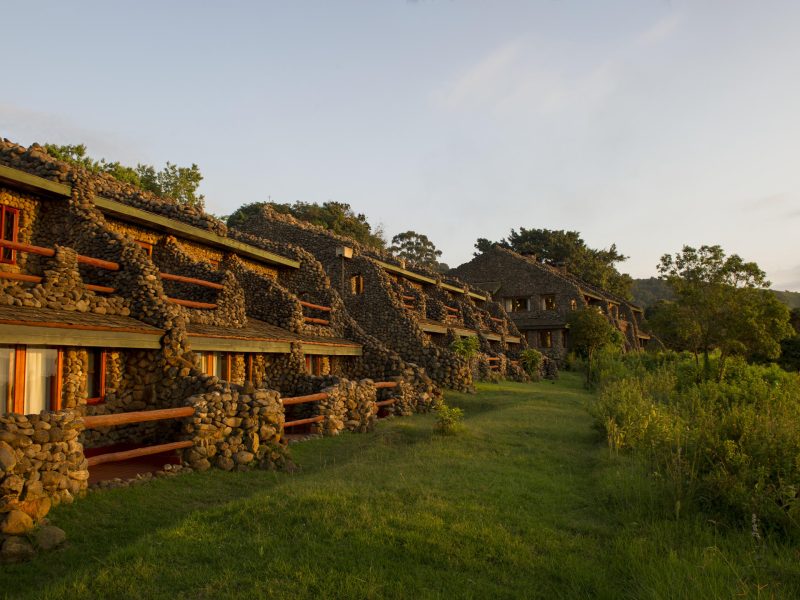
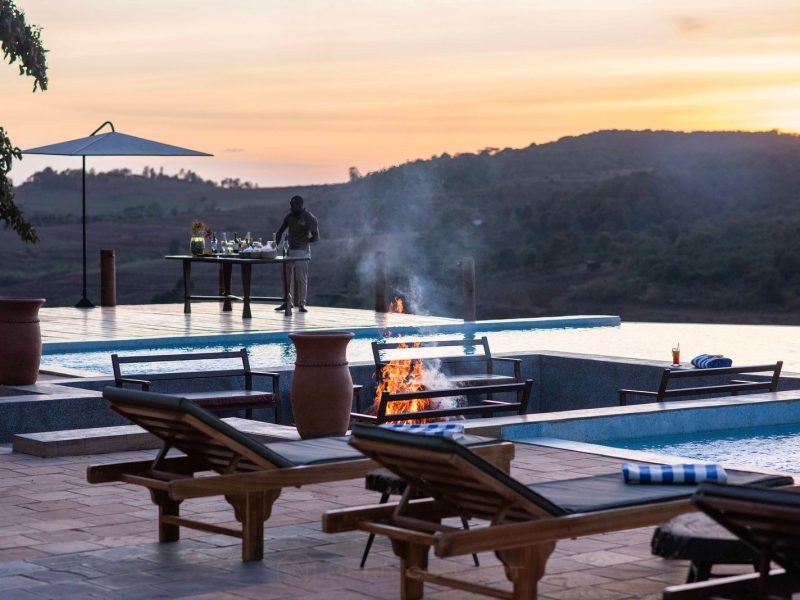
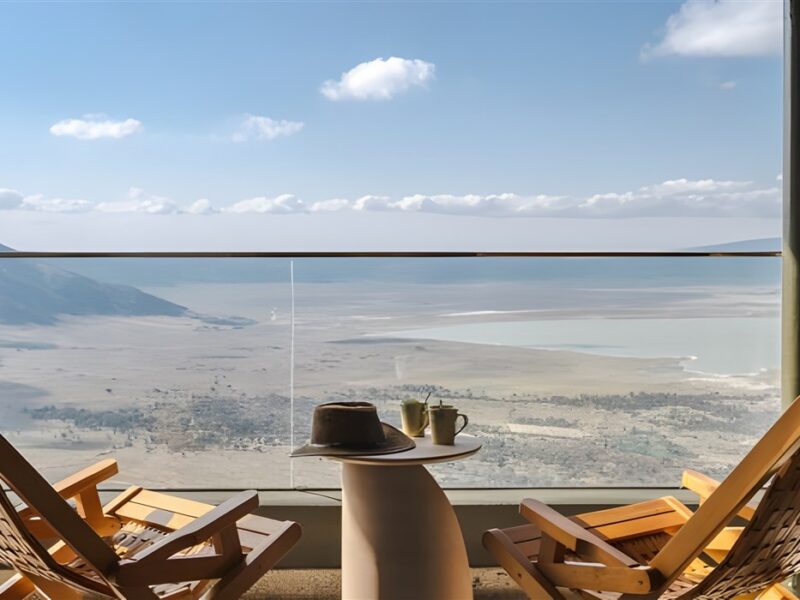
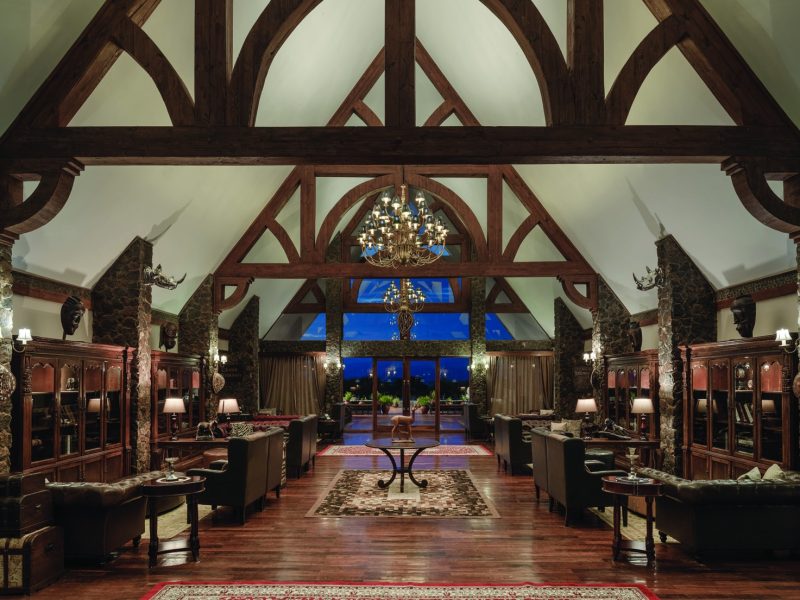
Crater rim: Lodges on the rim look straight down into the caldera, so you can watch the light move across the crater floor from your room. They are the closest base for an early descent, and the nights up here are cold, so a fireside drink is part of the routine.
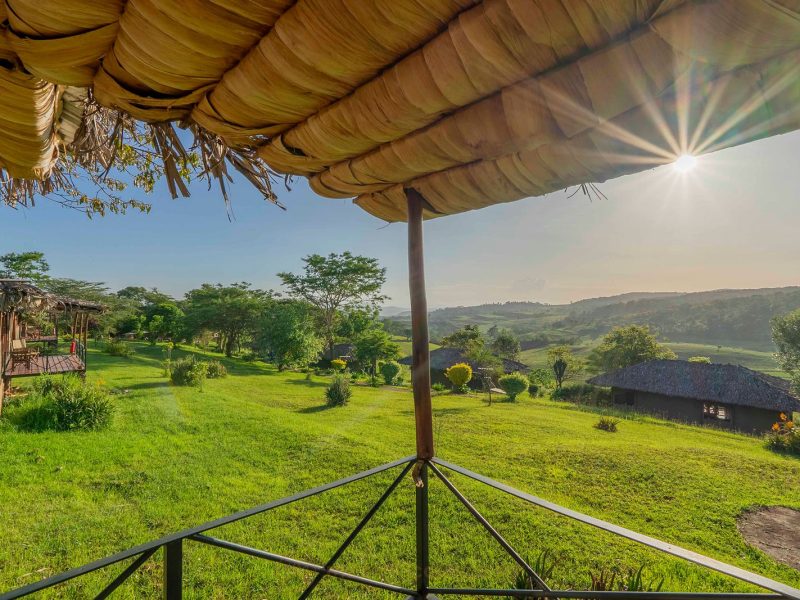
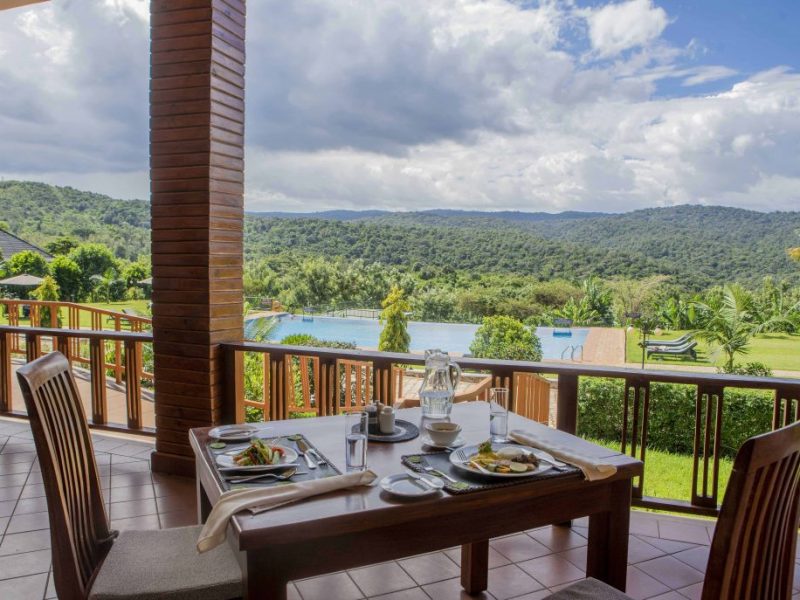
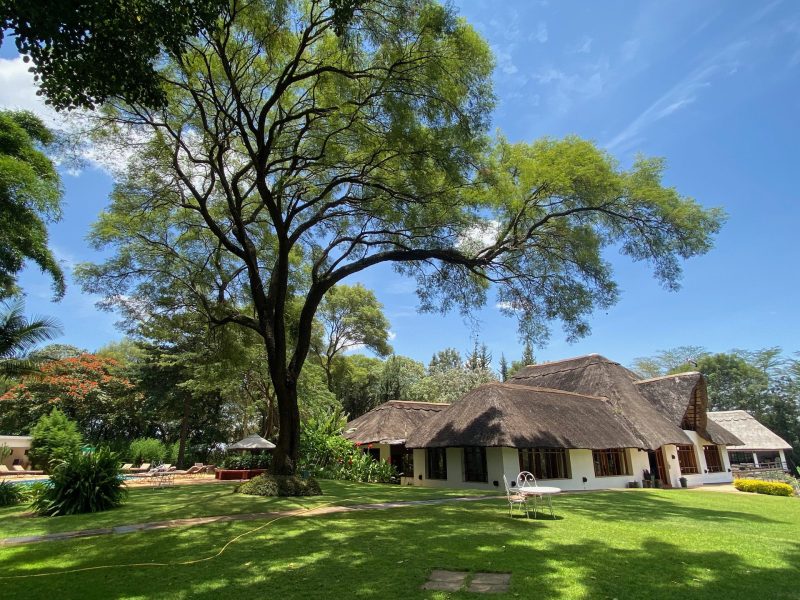
Karatu highlands: Just outside the Conservation Area, the farming country around Karatu, Rhotia and Oldeani is greener and gentler. Lodges here sit among coffee plantations and gardens, with farm walks and village visits on the doorstep. The crater gate is a short drive away, and Lake Manyara is easy to reach.
People have lived in these highlands for an extraordinarily long time. At Laetoli, a trail of footprints pressed into volcanic ash around 3.6 million years ago is among the earliest evidence of our ancestors walking upright. Nearby, Olduvai Gorge has yielded fossils and stone tools spanning almost two million years, many of them uncovered by Louis and Mary Leakey.
Much later, the highlands were home to Datooga herders and Iraqw farmers before the Maasai moved in during the 19th century. The name Ngorongoro is said to come from the Maasai, echoing the sound of a cowbell. In the early 20th century, two German brothers named Siedentopf even farmed part of the crater floor.
When the Serengeti National Park was created in 1951, it included the crater. In 1959, the Ngorongoro Conservation Area was set up as a separate area, where wildlife and Maasai pastoralists would share the land. UNESCO listed it as a natural World Heritage Site in 1979 and added cultural status in 2010 in recognition of Olduvai and Laetoli. Today no one lives on the crater floor, and the balance between people and wildlife across the wider area remains a subject of debate.
Around 25,000 large animals live on the crater floor, a concentration few places in Africa can match. Buffalo, wildebeest, zebra, eland and gazelles graze the open grassland, while lions and spotted hyenas are never far away. The crater is one of the best places in Tanzania to see black rhino, and its elephants are mostly old bulls, some carrying impressive tusks.
Look out for golden jackals, servals in the long grass and hippos wallowing in the pools near the Ngoitokitok Spring. Flamingos often gather on the soda waters of Lake Magadi, and leopards keep mainly to the forested rim. One animal you won’t find on the crater floor is the giraffe, though you may spot them on the plains beyond.
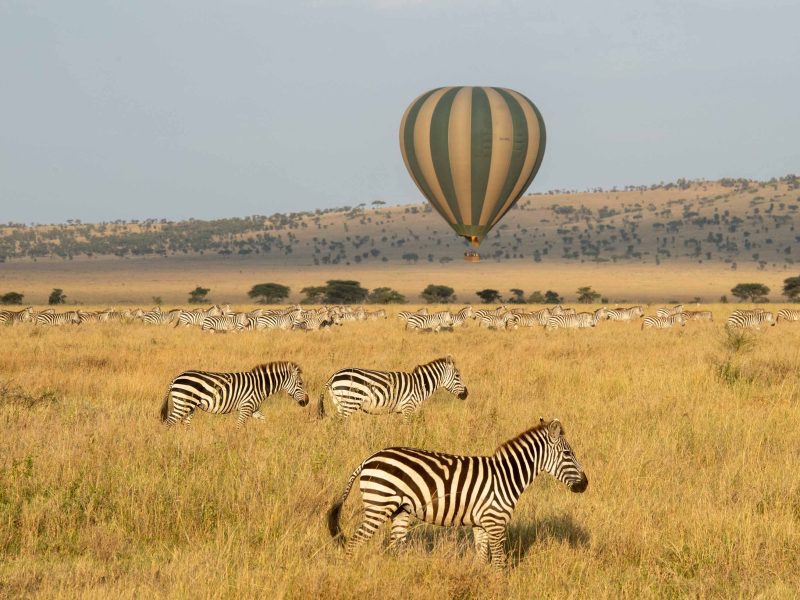
From around December to March, the Great Migration herds move onto the short-grass plains around Ndutu, in the west of the Conservation Area, to give birth. Lions, cheetahs and hyenas follow close behind. With more than 500 bird species recorded, the area is rewarding for birdwatchers too.
The crater can be visited all year, as its wildlife has permanent water and stays put. What changes with the seasons is the weather, the number of visitors and the action on the plains beyond.
Dry season (June to October)
Clear skies, short grass and easy game viewing make this the most popular time to visit, so the crater can be busy. The rim sits at around 2,300 m, and while the days are pleasant, early mornings and evenings are cold. Warm layers are essential for the drive down.
Short rains (November and December)
Showers tend to be brief and usually fall in the afternoon, and the landscape quickly turns green. The first migration herds begin to arrive on the Ndutu plains, and rates at many lodges drop in November.
Green season (January and February)
A drier spell between the rains brings the highlight of the year at Ndutu, where the wildebeest calve in their thousands, usually peaking in February. The crater is lush and quieter than in the dry season.
Long rains (March to May)
These are the wettest months, with heavy downpours and some muddy roads. Game viewing in the crater stays good, visitor numbers fall and April and May bring some of the lowest rates of the year.
A full day on the crater floor is the highlight. Set off early to beat the busiest hours on the descent road, then spend the morning with your driver-guide searching for rhino, lion and elephant. Lunch is a picnic at one of the designated sites, often beside a pool watched over by hippos. Visitors must stay in their vehicles on the crater floor, so binoculars are well worth packing.
Back on the rim, guided walks with an armed ranger follow the forest edge for views straight down into the caldera. For something more energetic, hike down into Empakaai Crater, where flamingos often gather on the lake, or walk to the waterfall at Olmoti Crater.
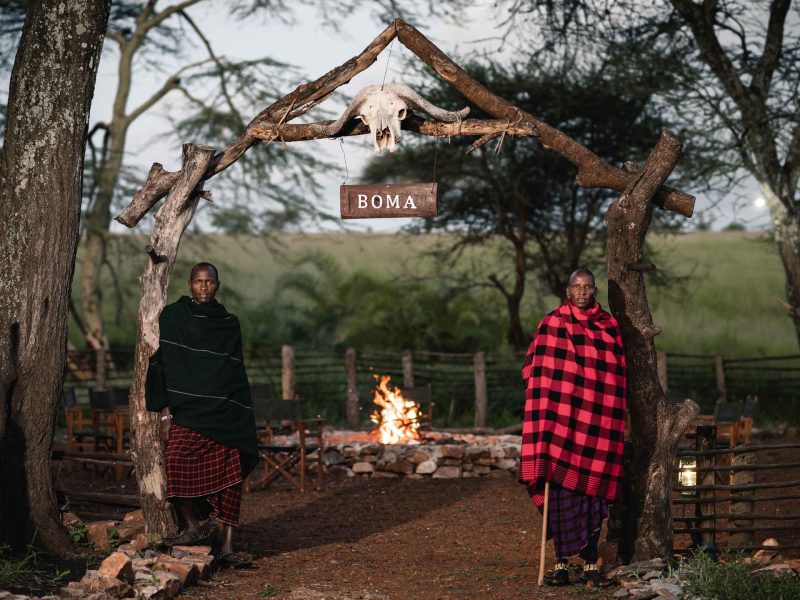
Olduvai Gorge is a must for anyone curious about our origins. Its museum tells the story of the Leakeys’ discoveries, including Homo habilis, first identified here. Tanzania now officially calls the site Oldupai, after the wild sisal that grows along the gorge. Closer to the crater, a visit to a Maasai boma is a chance to learn about highland life from the people who live it.
Around Karatu, coffee farm tours and village walks fill the gentler days. A day trip to Lake Eyasi, just beyond the Conservation Area, offers time with the Hadzabe, one of Africa’s last hunter-gatherer communities. In the calving season, a hot air balloon flight over the Ndutu plains makes an unforgettable start to the day.
The Ngorongoro Conservation Area covers 8,292 km² of northern Tanzania, west of Arusha and between Lake Manyara and the Serengeti, which it borders to the northwest. It takes in the volcanic Crater Highlands, including the Olmoti, Empakaai and Oldeani volcanoes, along with forest, open plains, lakes and the ravine of Olduvai Gorge.
At its heart lies the Ngorongoro Crater, formed two to three million years ago when a huge volcano collapsed in on itself. Measuring about 19 km across, with walls rising 400 to 610 m and a floor of around 260 km², it is the world’s largest unbroken, unflooded volcanic caldera. The rim stands at around 2,300 m and is cloaked in montane forest that catches moisture from the passing clouds.
Fresh water keeps the crater green all year. The Munge Stream flows in from the north and drains into Lake Magadi, a shallow soda lake on the crater floor, while the Lerai Stream feeds the Lerai Forest of yellow fever trees in the south. The Ngoitokitok Spring adds water on the eastern side. To the west, the land falls away to the short-grass plains of Ndutu, where the Conservation Area meets the southern Serengeti.
Ngorongoro is part of a wider selection of TANZANIA holidays and accommodation.